Western Sahara Flag SVG Bundle: Graphics for Crafts
As a brand designer who’s helped over 200 local businesses refine their visual identity—from artisanal soap makers in Portland to family-run coffee roasters in New Orleans—I recently evaluated the Western Sahara Flag SVG Bundle, Map for a real-world project: rebranding a small-batch Moroccan-inspired spice shop in Austin. What stood out wasn’t just the asset’s technical completeness—it was how its layered symbolism and versatile formats could elevate authentic, values-driven storytelling across packaging, labels, and social media—*if used intentionally*.
A Warm, Human-Centered Mood—Not Just Decorative
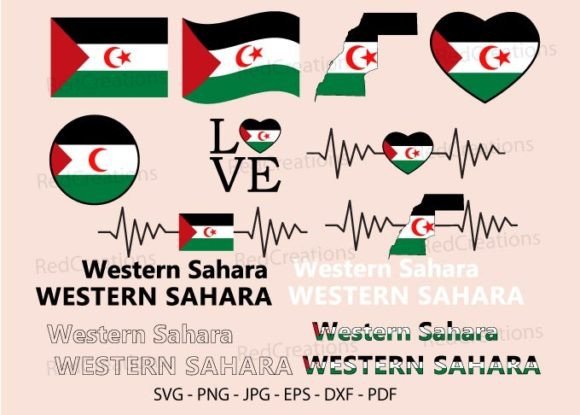
First impression? This isn’t generic clipart. The Western Sahara Flag SVG Bundle, Map carries quiet dignity—its clean lines, balanced proportions, and subtle texture options (especially in the PNG variants) suggest heritage, resilience, and geographic rootedness. It reads as warm, respectful, and grounded—not flashy or touristy. For a local business, that translates into immediate emotional resonance: think handmade skincare brands highlighting natural origins, boutique tea labels evoking terroir, or children’s product lines celebrating cultural storytelling. It leans elegant but approachable, modern but not sterile—ideal for brands that value authenticity over trend-chasing.
Where It Strengthens Real Small Business Branding
In practice, this graphic design asset shines where local businesses need clarity *and* character:
- Product labels & packaging accents: A single round flag or heartbeat motif adds instant visual hierarchy to spice tins or soap wrappers—guiding the eye without overwhelming ingredient lists or certifications.
- Thank-you cards & hang tags: The SVG’s crisp vector scalability means it prints flawlessly at 1” x 1” on kraft paper tags or expands boldly on 5” x 7” thank-you cards—reinforcing brand consistency across touchpoints.
- Social media graphics: The PNG files with transparent backgrounds drop seamlessly into Instagram carousels or Facebook event banners, especially when paired with serif or handwritten fonts to emphasize craft and care.
- Seasonal campaign visuals: The “Love” and “Heart” variants work beautifully for Ramadan or Eid promotions—adding cultural warmth without cliché, especially when anchored by strong typography and restrained color palettes.
- Printable inserts & menu graphics: For cafes or food trucks using regional ingredients, the map element subtly reinforces origin stories—e.g., pairing the Western Sahara map with a tagline like “Sourced with intention” beside a harissa label.
Where It Builds Trust—Beyond Aesthetics
Small business owners often underestimate how much cohesive, intentional design builds credibility. When customers see the same refined flag motif repeated across a product label, website banner, and Instagram Story highlight, they subconsciously register professionalism and attention to detail. That consistency—enabled by the Western Sahara Flag SVG Bundle, Map’s multi-format delivery (SVG, PNG, JPG)—supports stronger first impressions, better shelf appeal in local boutiques, and more polished marketing visuals overall. For handmade businesses selling at farmers’ markets or craft fairs, that polish directly correlates with perceived value—and willingness to pay a premium.
Smart Usage Boundaries—What to Avoid
This isn’t a one-size-fits-all solution. Use it carefully—or avoid altogether—in these contexts:
- Formal corporate branding: Its cultural specificity makes it unsuitable for banks, law firms, or B2B SaaS platforms aiming for neutral universality.
- Ingredient-dense packaging: Don’t place the waving flag or heart motif directly over nutritional facts or allergen statements—it competes with critical information and weakens visual hierarchy.
- Luxury minimalist brands: If your aesthetic is monochrome, ultra-sparse, and type-driven (e.g., high-end ceramics), the decorative elements may dilute your core message.
- Low-contrast backgrounds: Test the PNG transparency rigorously—some variants lose legibility against light beige or off-white kraft stock unless manually adjusted.
Practical Designer Notes You Can’t Skip
Before committing this asset to client work or physical production, here’s what I always verify:
- Test on real packaging mockups—not just digital previews—to assess scale, bleed, and material interaction (e.g., does the round flag read clearly on matte-finish soap boxes?).
- Check black-and-white usage: Print a grayscale version of your label layout—if the flag disappears or muddies adjacent text, adjust stroke weight or add subtle outline.
- Preview at actual label size: A 12mm round flag looks charming on screen but vanishes on a 2oz candle jar. Scale down the SVG and zoom to 300%—does it retain crispness?
- Test with your brand colors: Does the flag’s palette harmonize with your primary hues—or clash? Try overlaying it on your exact Pantone or HEX background swatches.
- Inspect SVG editability: Open the file in Illustrator—can you easily recolor paths, adjust anchor points, or isolate the heartbeat icon for standalone use? Not all “SVG” files are truly vector-editable.
- Confirm commercial licensing: This is non-negotiable. Ensure the license explicitly permits use on physical products (e.g., printed labels, stickers) and resale—many creative marketplace assets restrict merchandising rights.
- Compare with competitor packaging: Does it help you stand out—or blend in? In crowded categories like gourmet foods or natural beauty, distinctiveness drives discovery.
Final Thought: A Tool for Meaningful Differentiation
The Western Sahara Flag SVG Bundle, Map isn’t just another digital product—it’s a culturally resonant design asset that, when thoughtfully integrated, helps local businesses tell richer, more human stories. For the spice shop in Austin, it became a quiet signature: a round flag embossed on cork stoppers, a heartbeat motif beside “hand-blended in Texas,” and the map subtly textured into seasonal gift box liners. That cohesion—across Crafts, Graphics, and real-world application—is what transforms decoration into brand identity. Use it with purpose, test relentlessly, and let it serve your story—not the other way around.